In War and Revolution: Echoes
29.4.–11.5.2025., MMSU prizemlje
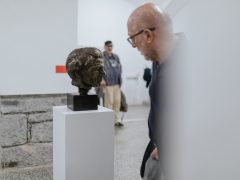
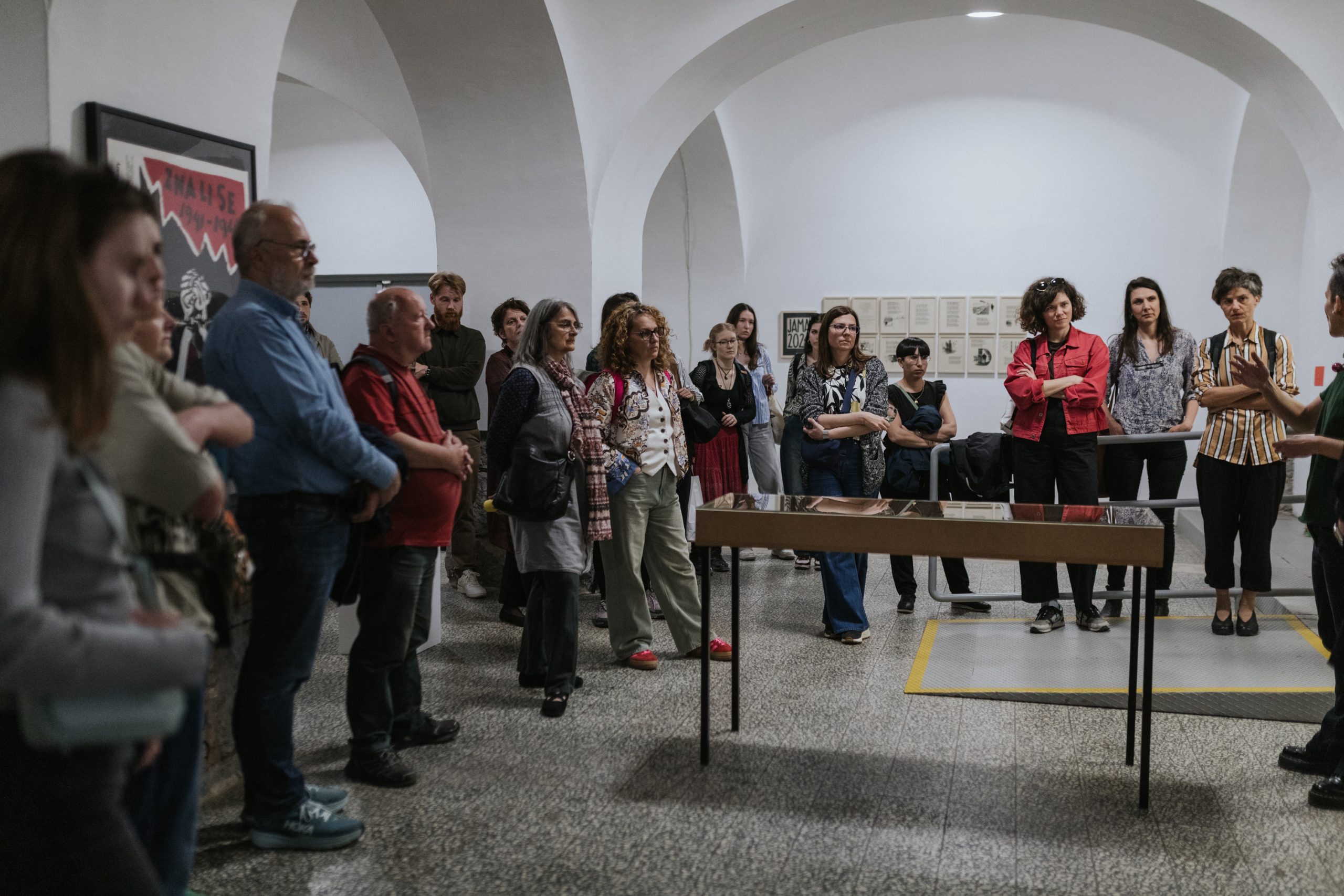
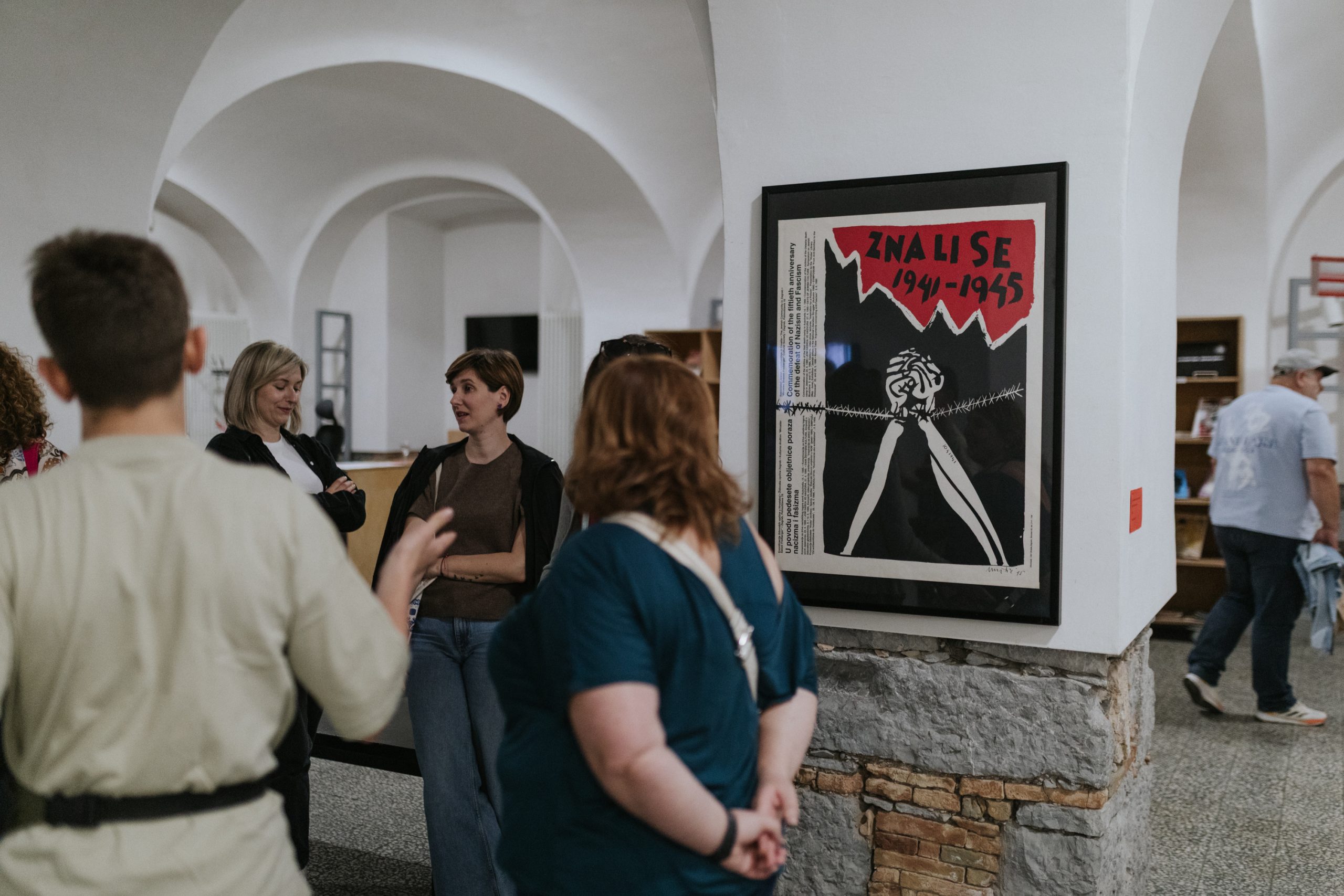
With a modest commemorative exhibition titled In War and Revolution: Echoes, the Rijeka Museum of Modern and Contemporary Art will mark the upcoming anniversaries: the liberation of the City of Rijeka and the end of the Second World War. The exhibition will take place on the ground floor of the Museum, and it will feature the works from the Museum’s collections, by Vojin Bakić, Ivan Goran Kovačić, Edo Murtić, Zlatko Prica and Ratko Petrić, as well as the works of invited contemporary artists Ana Bilankov and Tanja Dabo.
Artists: Ana Bilankov, Vojin Bakić, Tanja Dabo, Ivan Goran Kovačić, Edo Murtić, Zlatko Prica, Ratko Petrić
Delving into the themes of resistance and actions in art and culture rooted in antifascism, the exhibition raises the question of how to actualize the ideas of solidarity within a museum context by relying on art concepts and approaches. It thoughtfully combines visual, linguistic, textual and acoustic elements, as well as tributes and correspondence among artists from different periods – both contemporary and (post)partisan times – which is evident in the very title: In War and Revolution: Echoes. Along with intertextuality and citation, it highlights the mnemonic role of art in preventing oblivion, as well as its defiant attitude toward the resurgence of right-wing ideologies. As the writer and philosopher Umberto Eco says in his essay Ur-Fascism: “I think it is possible to outline a list of characteristics typical of what I would like to call Ur-Fascism or Eternal Fascism. These features cannot be organized into a system; many of them contradict each other, and are also typical of other kinds of despotism or fanaticism. But it is enough that one of them be present to allow fascism to coagulate around it.”[1]
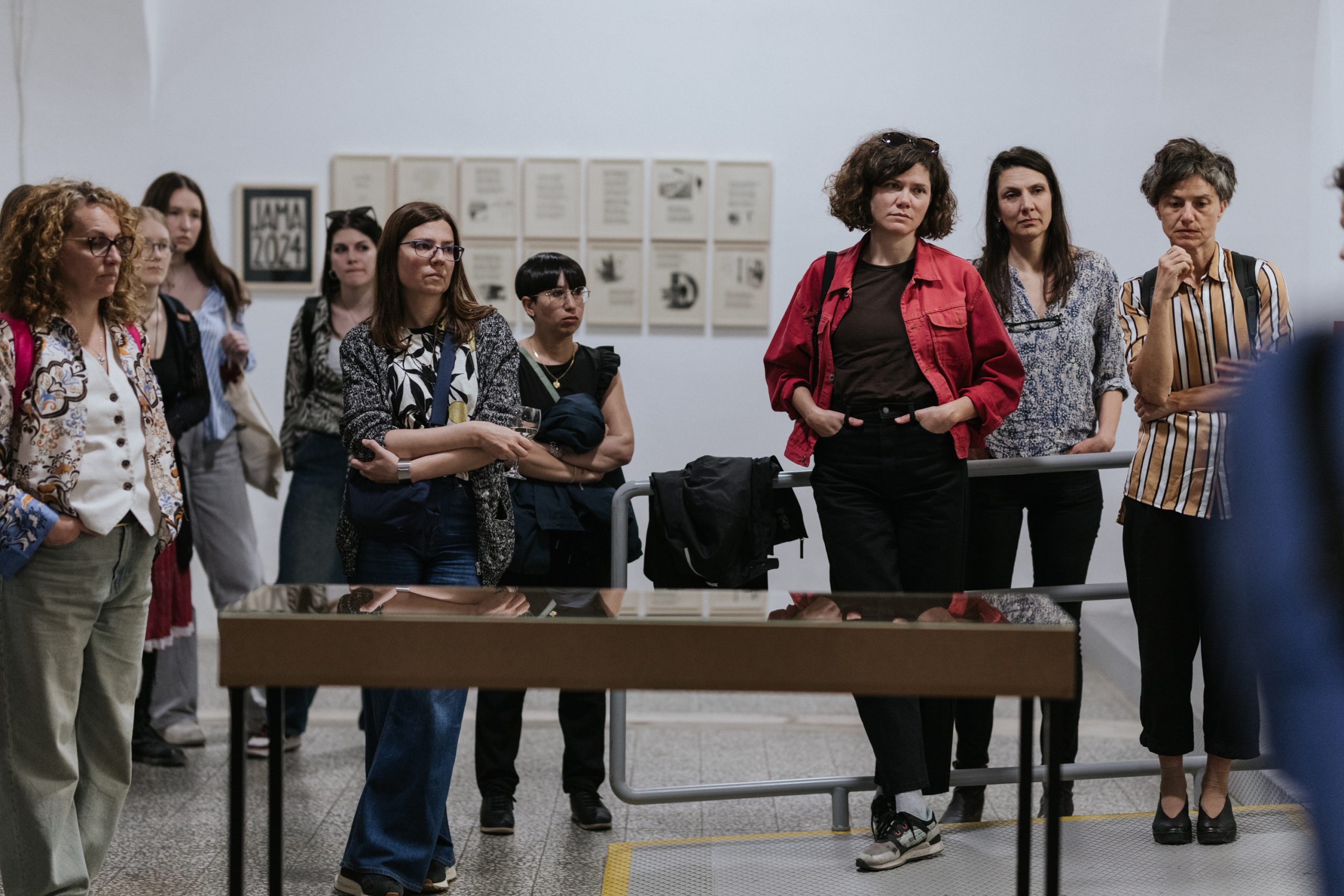
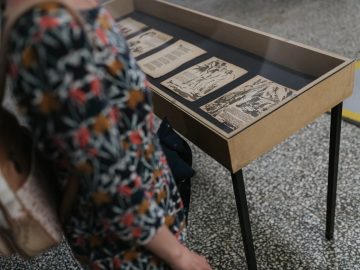
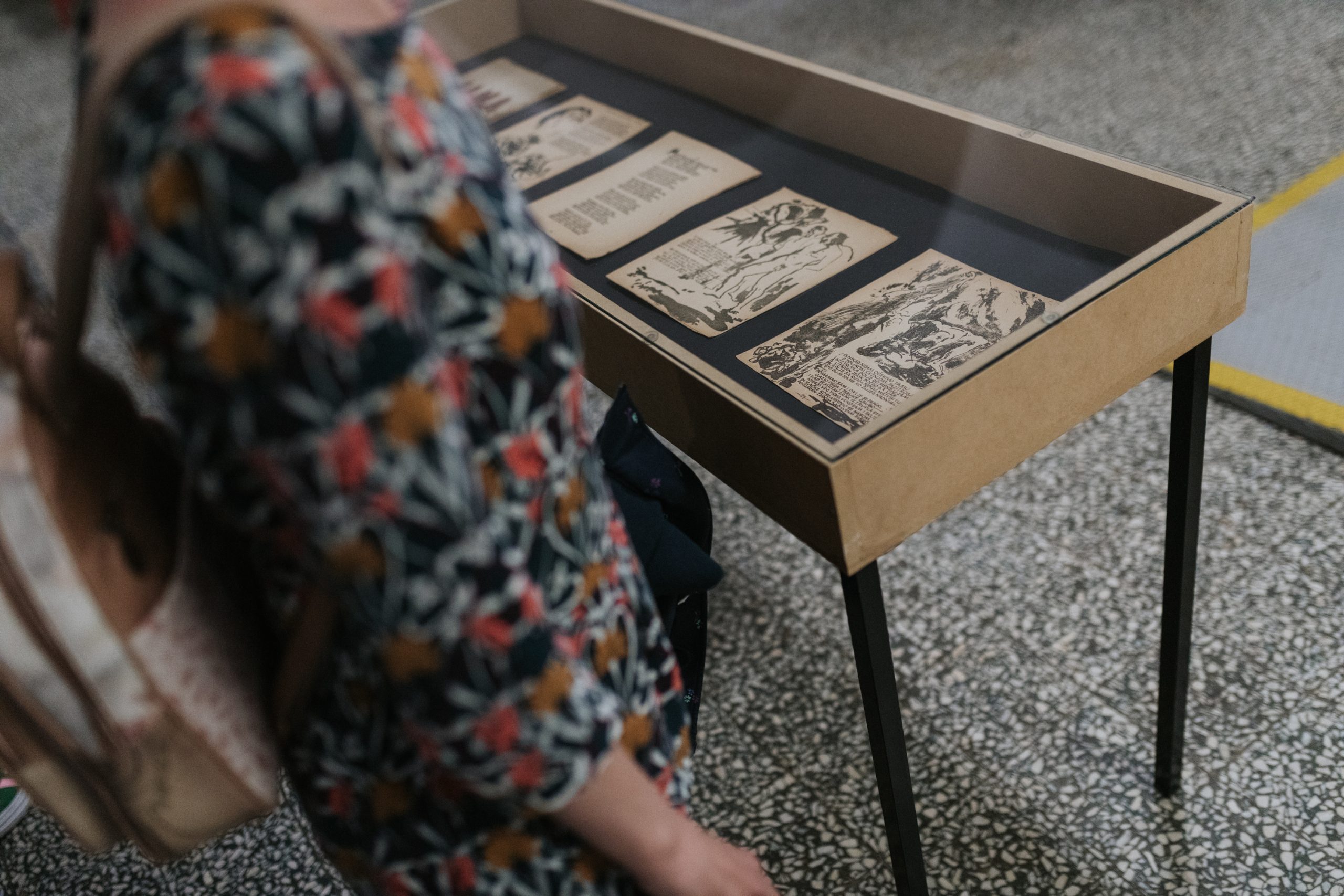
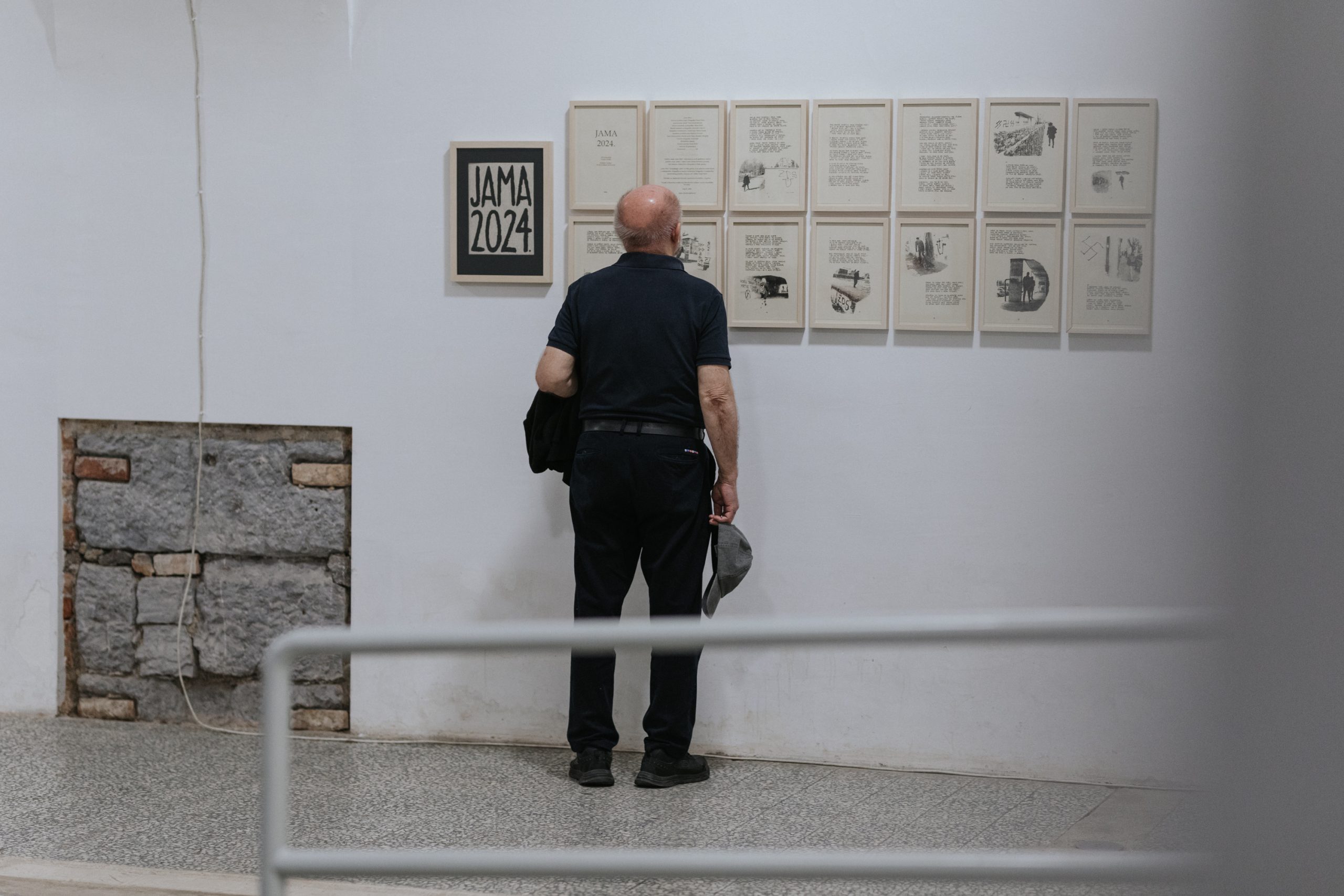
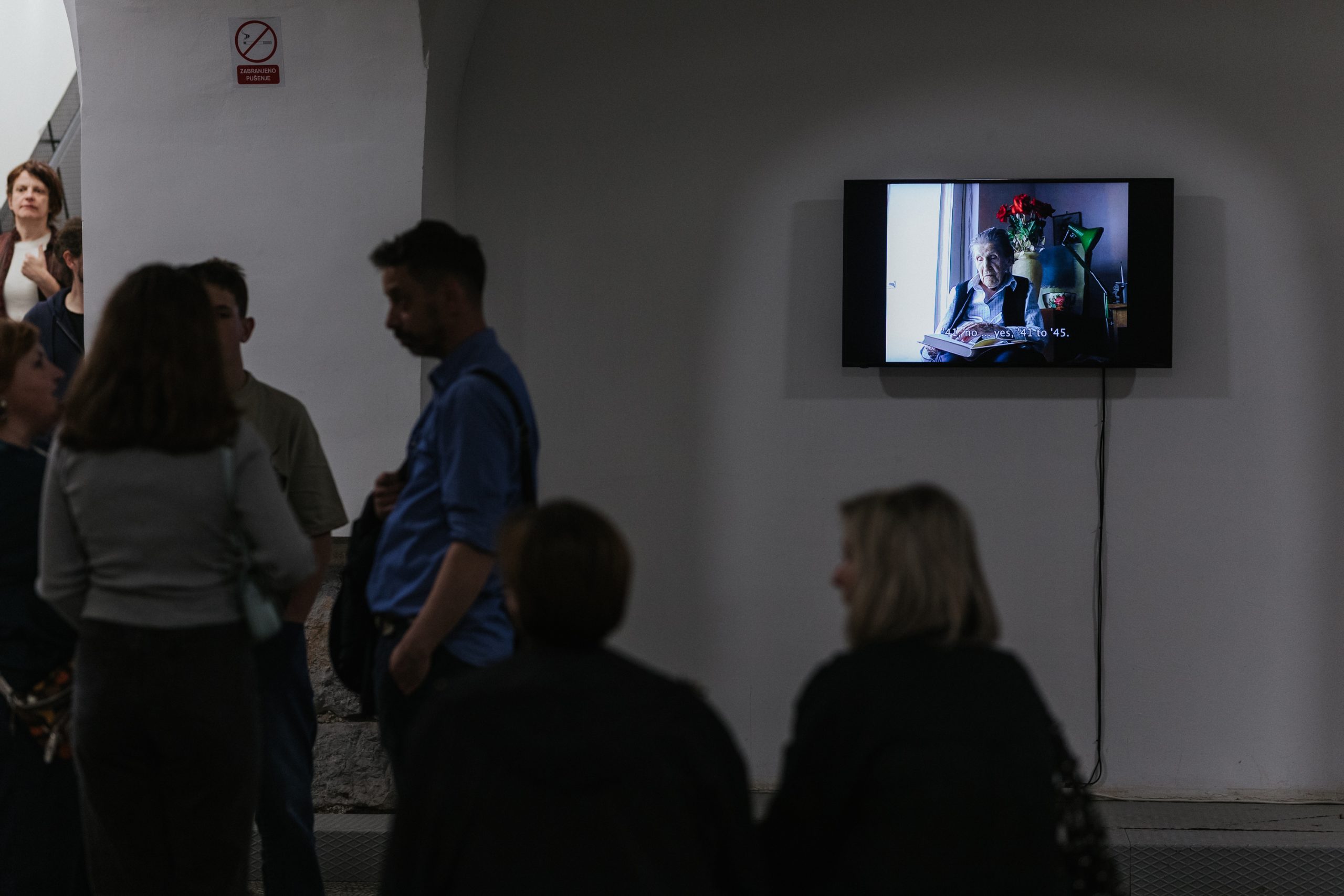
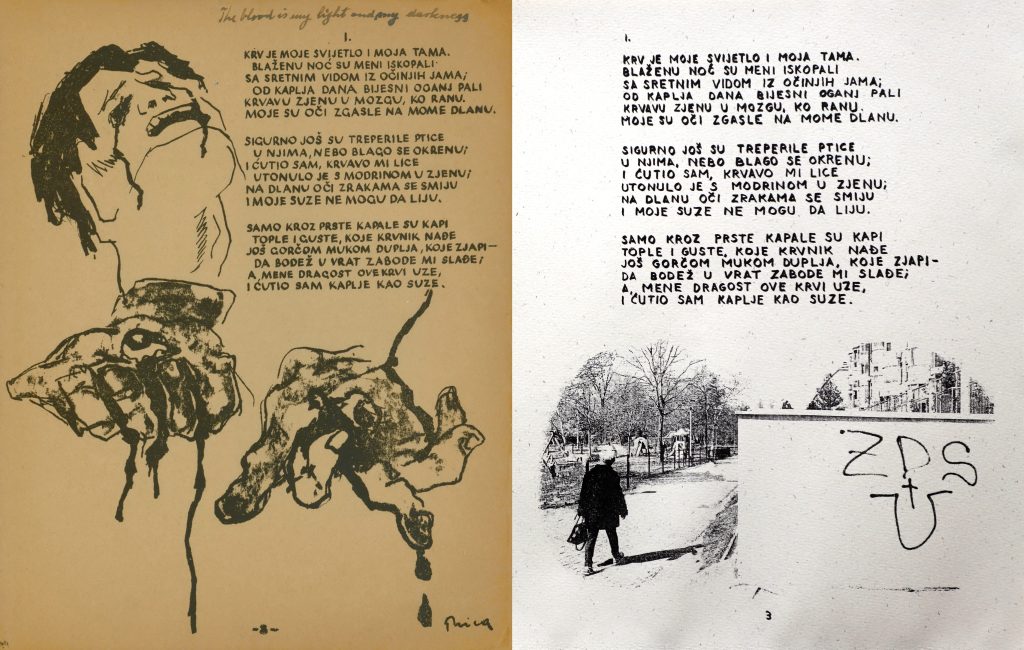
Revolt against the suppression of the anti-fascist heritage was the starting point for contemporary artists Ana Bilankov and Tanja Dabo. Their works, created in different media, deal with the shadows of the long process of transition in Croatia. They draw from the ethnographic methods such as intergenerational folklore and field notes, which is particularly seen in the Ana Bilankov’s video, In War and Evolution (2011). In the video, Bilankov talks to her grandmother about a book by Tomo Žalac, the artist’s grandfather, about the history of pedagogy in the People’s Liberation Struggle – book that became politically undesirable at the beginning of the 1990s. The documentary approach is also apparent in Tanja Dabo’s portfolio of prints titled The Pit. The portfolio represents a textual replica of the poem The Pit written in 1944 by the Croatian poet Ivan Goran Kovačić. Dabo’s work depicts street scenes with passersby turning away from Ustaša symbols and expressions of intolerance that are visible on the surrounding buildings[2].
In a dialogue between the present, the future and the past, the gathered works suggest that history is not a linear story of progress, but unfolds in strange loops, marked by obvious or gradual acts of censorship – from the removal of an undesirable letter and content from private bookshelves, but also depots of cultural institutions (Ana Bilankov), to the strengthening of right-wing movements and the normalization of such phenomena in public space (Tanja Dabo). Like their predecessors, these artists appear in multiple roles – as witnesses, participants and interpreters of social reality. They reinterpret tangible traces of the past, that is, its cultural and historical manifestations, from Žalac’s postwar book Škola i odgoj u ratu i revoluciji [School in War and Revolution] to Kovačić’s anti-war poem. They pose the question of how cultural artifacts in times of regime changes become unwanted and denied witnesses of the era, both from a macro and micro perspective. Artistic mediation becomes a material practice of thought that listens to previous generations, and contests the force of annihilation using personal and collective remembrance. The force of annihilation is presented in two ways – at the level of violent and imposed cessation of existence, but also symbolic elimination, stripping of dignity, and paralyzing through fear. Anthropologist Deborah Bird Rose speaks of “dual death”, describing it as the interruption of life, but also the interruption of life forms and ways of living. It does not necessarily occur within the dominant, visible register and within a clearly defined period, and it is accompanied by eerie changes in ecological and cultural systems.
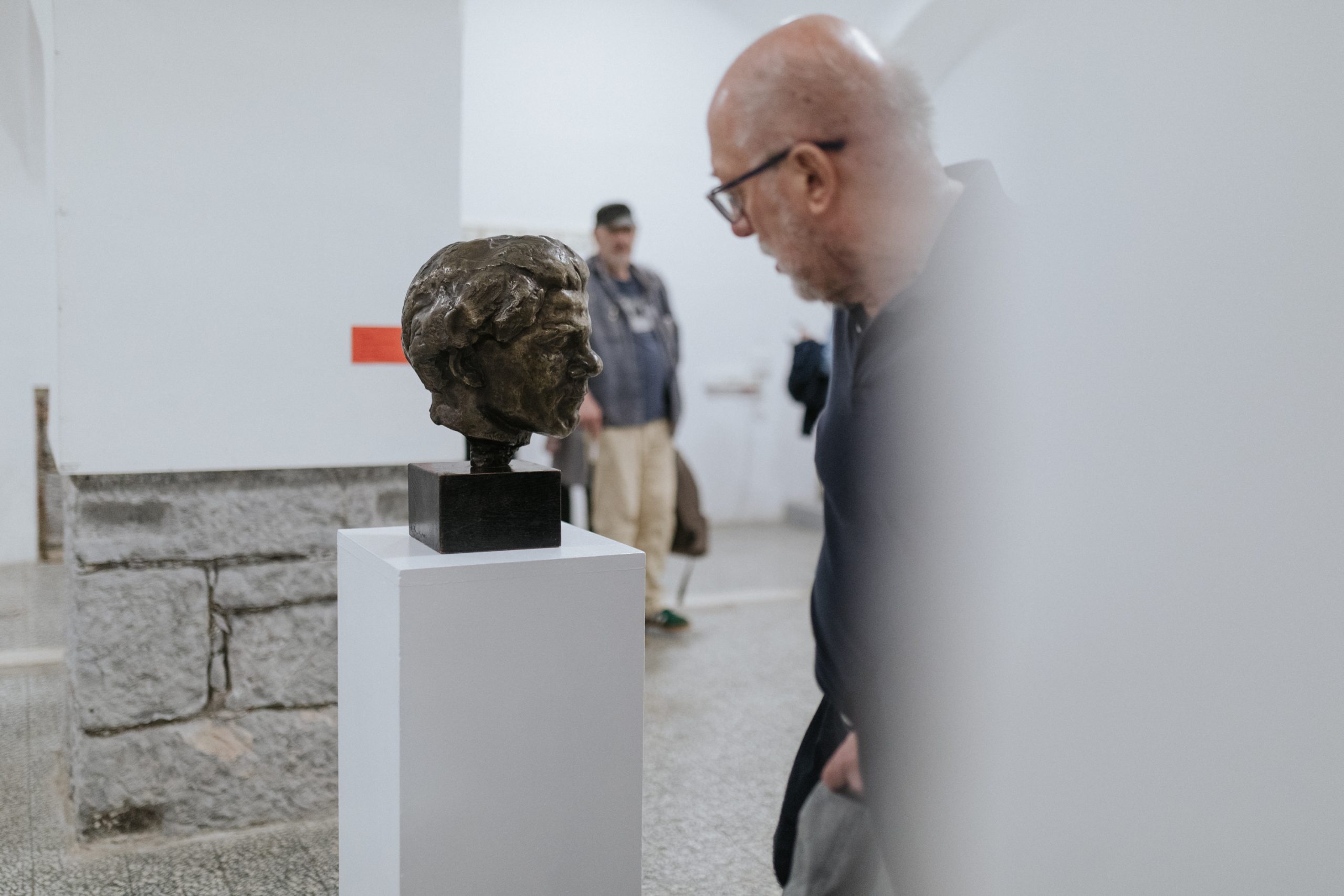
The above-mentioned anti-war poem The Pit served as the main inspiration for the exhibition. The poem speaks about the experience of torture and mass executions of civilians in the territory of the NDH, from the perspective of a blind victim who remains anonymous. The reinterpretation of this poem can be seen in the works of Tanja Dabo and Edo Murtić, and its place of creation and cultural worldview are mentioned in Petrić’s poster. Its author is looking at us from Bakić’s portrait, and we also find it in the work of Ana Bilankov, in the reaction against oblivion and historical censorship. Finally, its echo is present in the artistic protest against closing our eyes and taking cover in silence when faced with the absurdity of wars.
(From text by Ksenija Orelj)
Curators: Branka Benčić, Ksenija Orelj
Supported by: City of Rijeka and Ministry of Culture and Media of the Republic of Croatia
Within the programme Nulti sat.
Photo: Ivan Goran Kovačić; Edo Murtić, Zlatko Prica, The Pit , 1944. i Tanja Dabo, The Pit 2024, 2024.
[1] https://www.lupiga.com/vijesti/umberto-eco-esej-o-vjecnom-fasizmu
[2] Nastavak istraživanja umjetnice Usputno zlo, https://vizuraaperta.wixsite.com/vizuraaperta/usputno-zlo
Gallery