Mediterranean Crossed Residencies: umjetnice Kristina Borg, Nathalie Harb and Elena Mazzi in Rijeka
13.3.–30.4.2025.
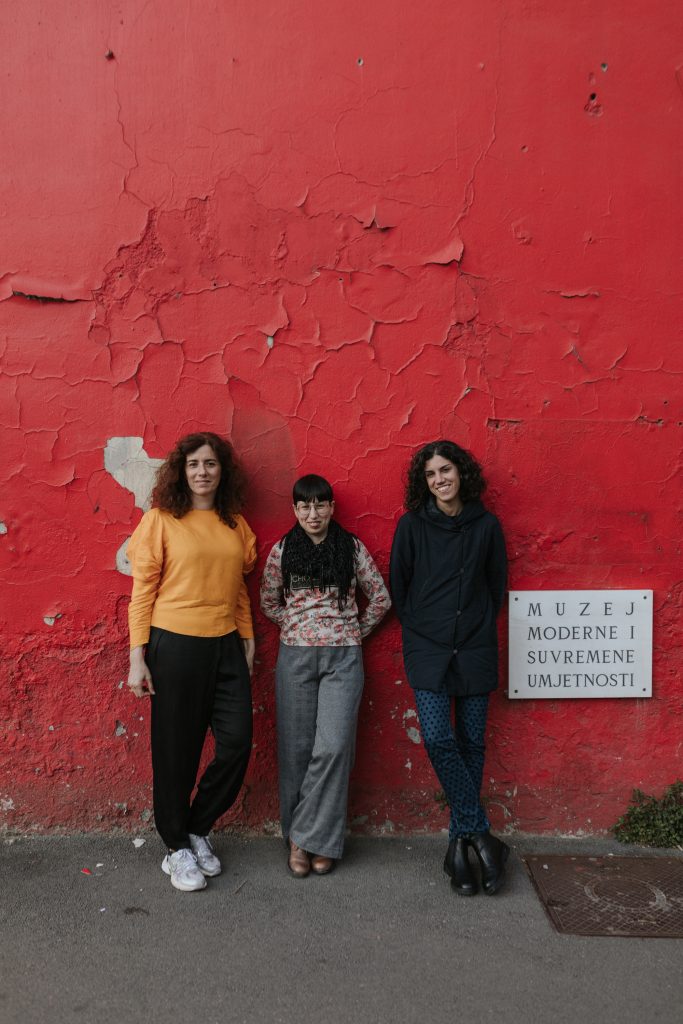
Through the collaboration between the Rijeka Museum of Modern and Contemporary Art (MMSU) and the Art Explora Foundation, three artists will be staying at the Kamov Residency in April: Kristina Borg (Malta), Nathalie Harb (Lebanon/France) and Elena Mazzi (Italy).
Mediterranean Crossed residencies, a programme launched as part of the Art Explora Festival, connects artists from different Mediterranean countries. Conceived as a platform for exchanges and creation of cross-border narratives, the programme directly supports contemporary art creation and brings together a vast community of artists, scholars and cultural professionals, focusing on crucial social, cultural, and environmental issues related to the Mediterranean. The residency programme has been launched in partnership with the Island Club.
The network gathers 15 institutional partners based in various Mediterranean countries. The MMSU and the Kamov Residency Program are included in an initiative connecting three cities: Valletta, Naples and Rijeka.
At the Kamov Residency, the artists are delving into themes related to the sea, ecology, urban transformation, feminist issues and political violence.
During her stay in Rijeka, Kristina Borg will be developing a project related to port cities and islands of the Mediterranean. Through encounters with the local community, she will explore women’s experiences and their relationship with water and the sea. She also intends to use the residency as an opportunity to slow down and reflect on her artistic and research processes. “Like water, women have been commodified and exploited. As water flows, transforms, twists, and turns, women are also often hailed for their adaptability. But what happens if women refuse to adapt to the privileged and patriarchal dominance, especially within the context of port cities?” (from the artist’s statement)
Elena Mazzi will orient her research toward the complex connections between economy, ecology, tourism and mobility in Rijeka. She is particularly interested in collaborating with the Blue World Institute of Marine Research and Conservation. “The city is dealing with a rapid transformation towards mass tourism, with different construction projects underway. At the same time, projects related to protection of the ecosystems are taking place there”, Mazzi notes.
Looking back at the past year through images, sounds, data and news, Nathalie Harb is creating an intimate archive of conflicting temporalities in the form of video and collage. “The year felt both distant and immediate shaped by the genocide in Palestine, the war in Lebanon, Trump’s leadership reversing decades of progress”, says Harb. Living outside Lebanon, in a western city largely unaffected by the physical violence of war, I found myself caught between personal and global temporalities.” Nathalie Harb’s residency is also organized in partnership with the Temporary Art Platform – TAP.
This large international trans-Mediterranean project began with the residency of Astrit Ismaili (Kosovo) in Marseiile in October 2023, while Croatian artist Renata Poljak travelled to Malta in 2024.
Photo: Tanja Kanazir