Jelena Jureša: “Choreography of Violence”
13.11.2025.–22.2.2026.
On Thursday, November 13 at 7 p.m., the first major solo exhibition by Jelena Jureša in Croatia, titled Choreography of Violence, will open.
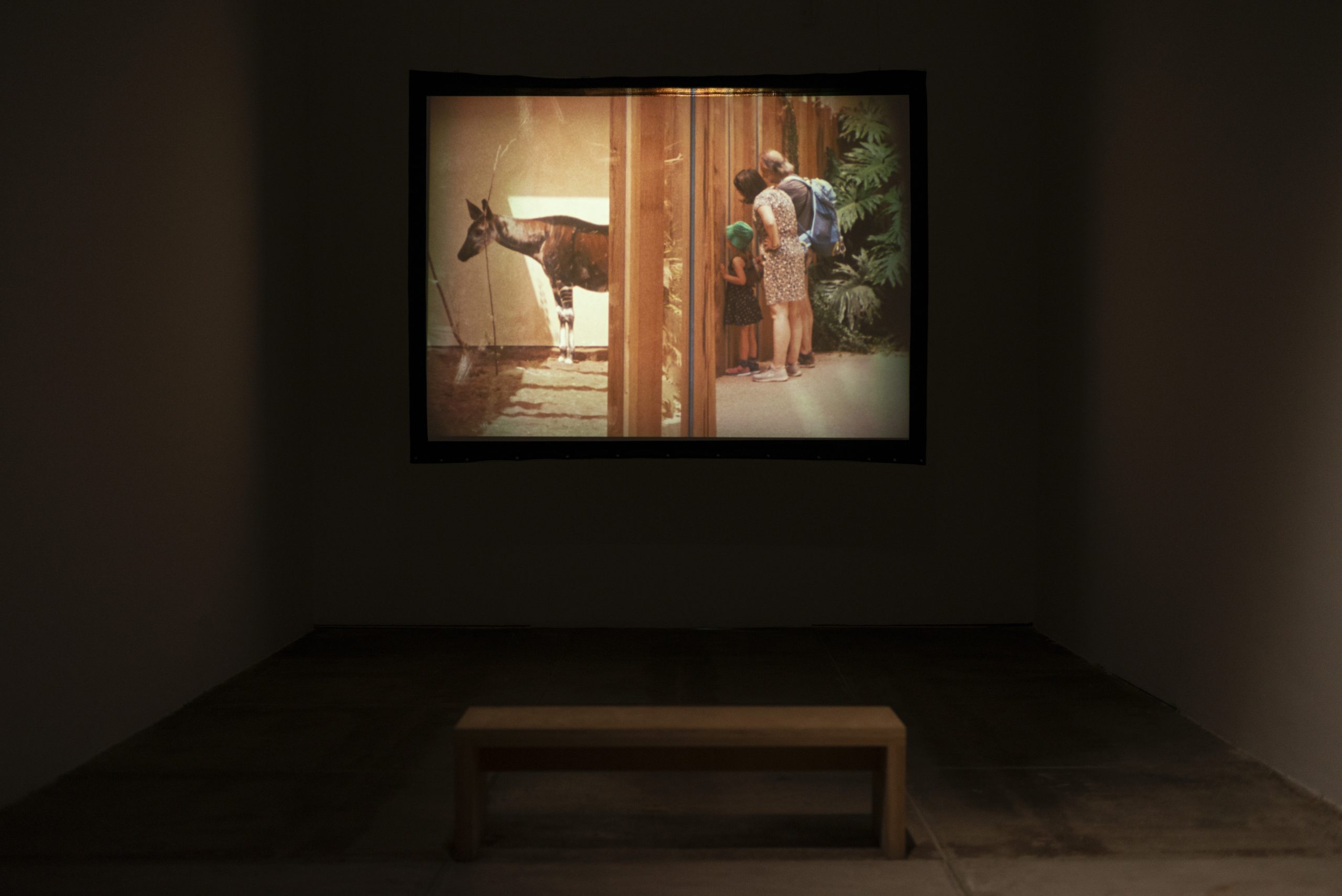
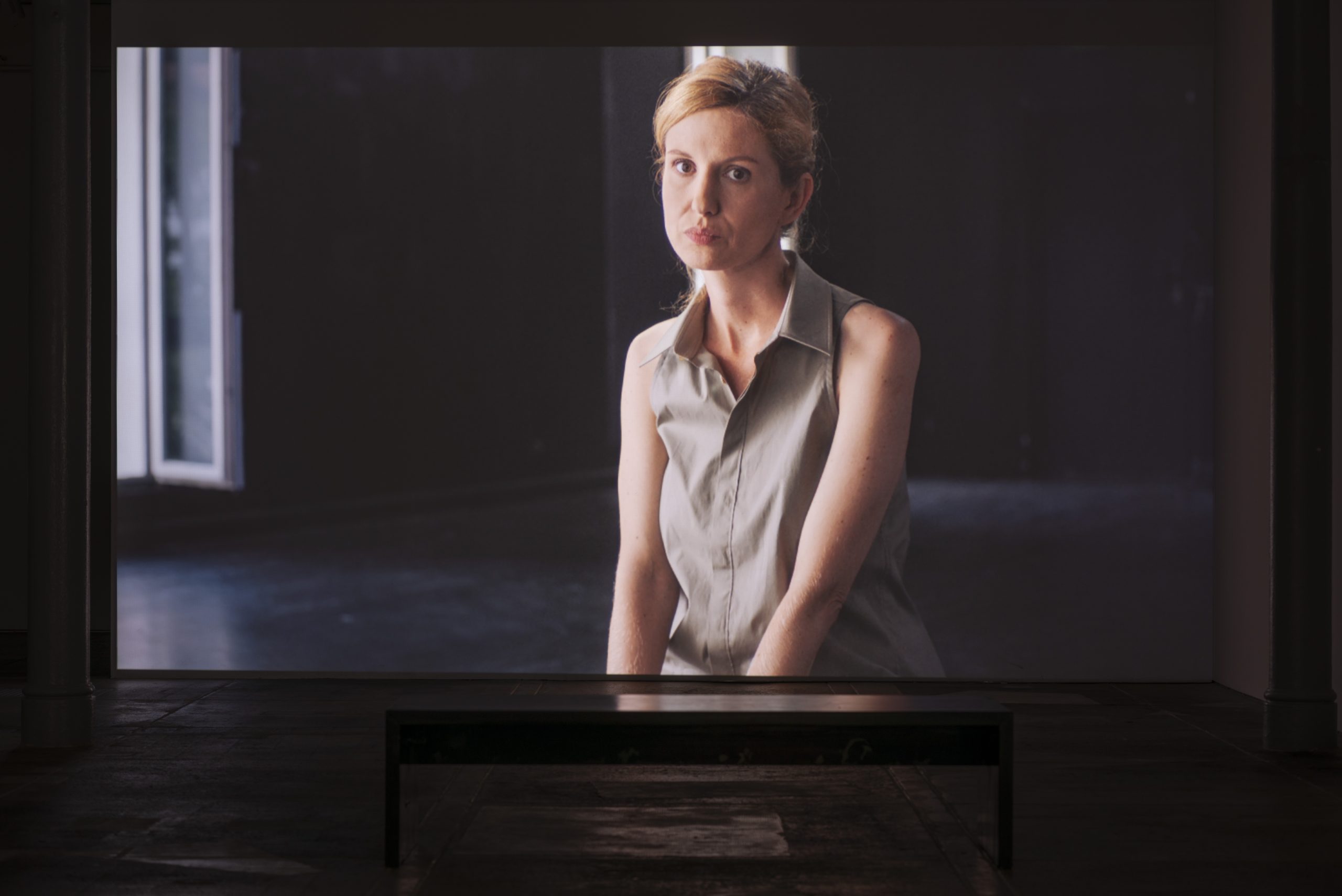
The Museum of Modern and Contemporary Art presents Choreography of Violence, Jelena Jureša’s first larger solo exhibition in Croatia, which gives an overview of her recent production in the area of film, video and film installation. In her work, Jelena Jureša explores the issues of identity, politics of memory and oblivion, the relationship between the observer and the observed, and the representational power of the image. By exploring the complex interplay between collective memory and political responsibility, her artistic practice questions the ways in which history is reflected and reproduced in contemporary society.
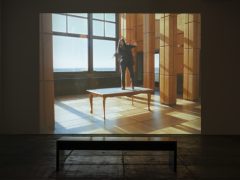
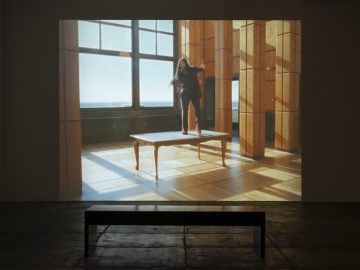
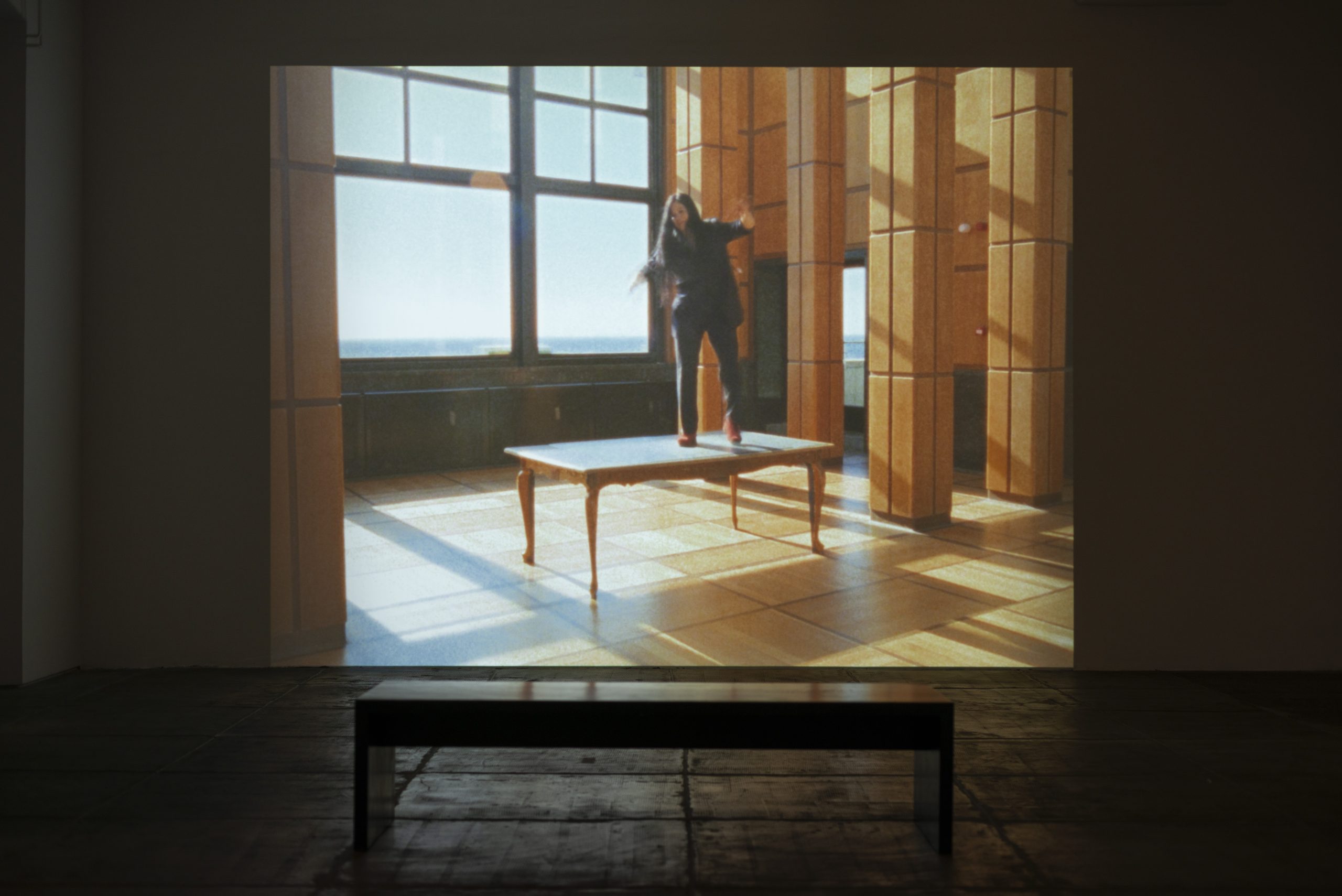
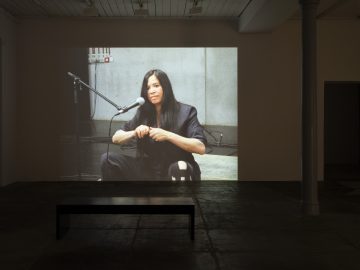
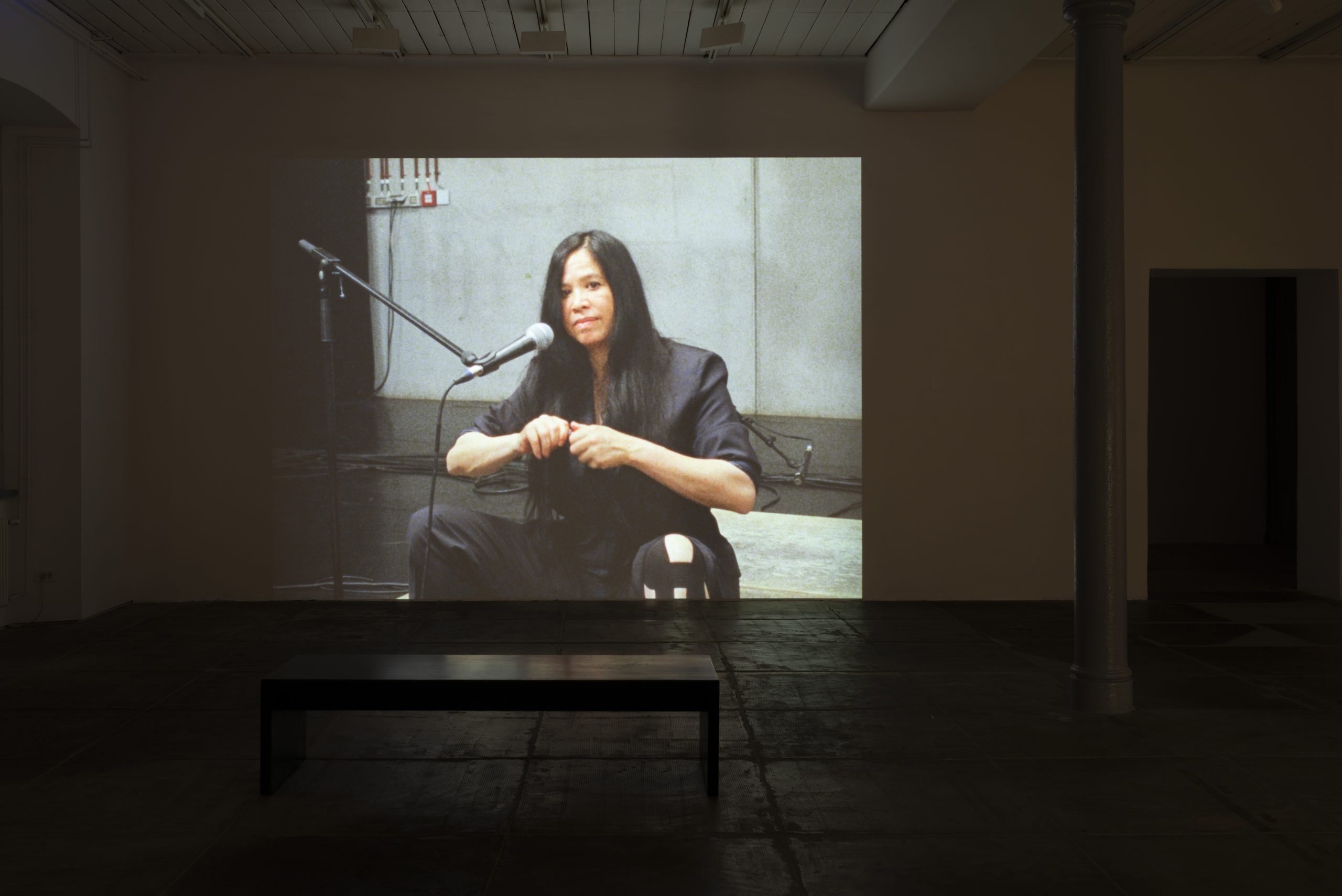
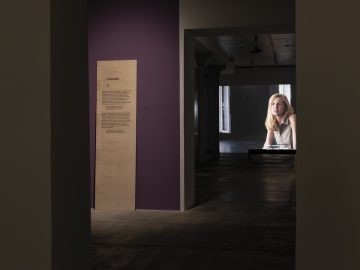
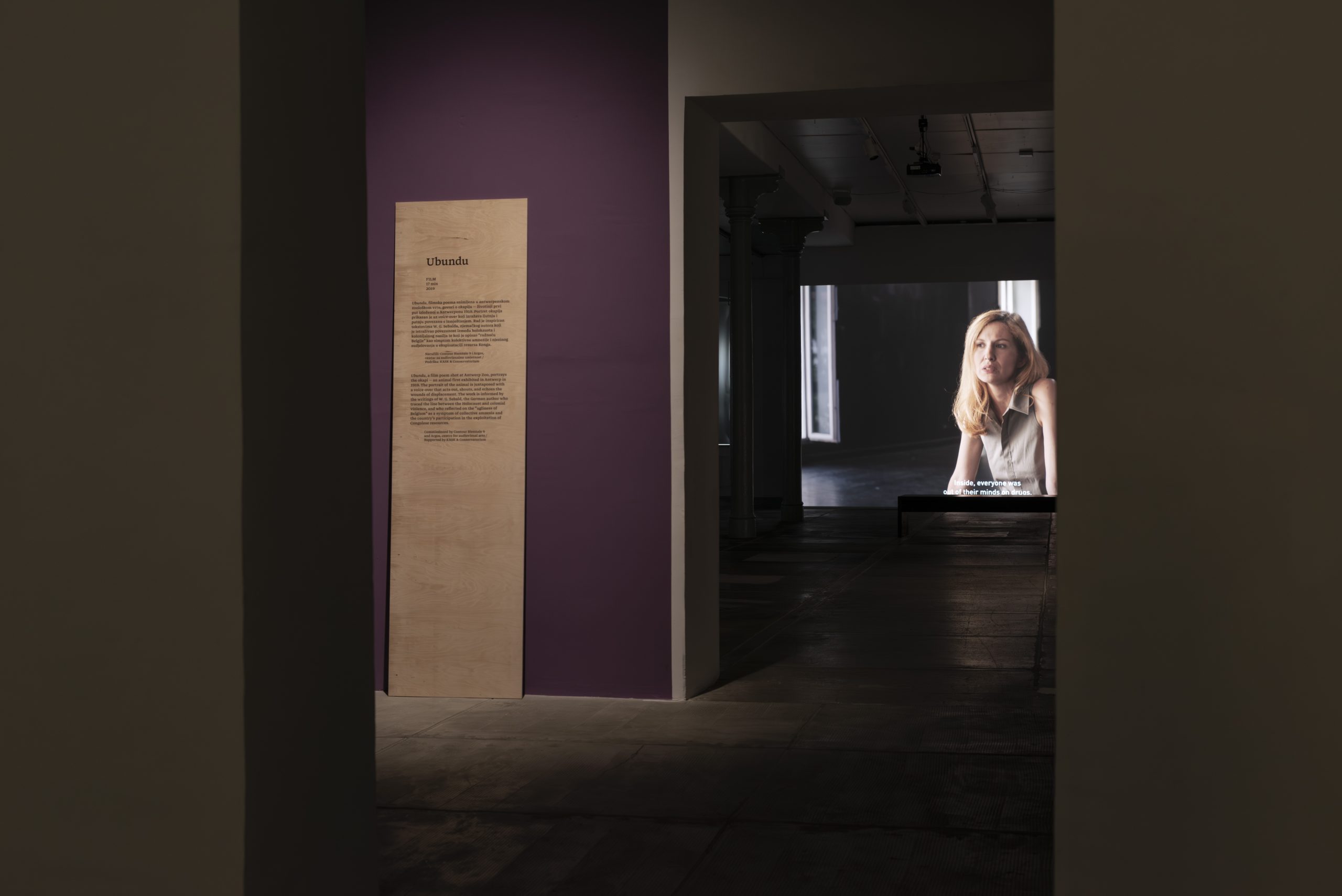
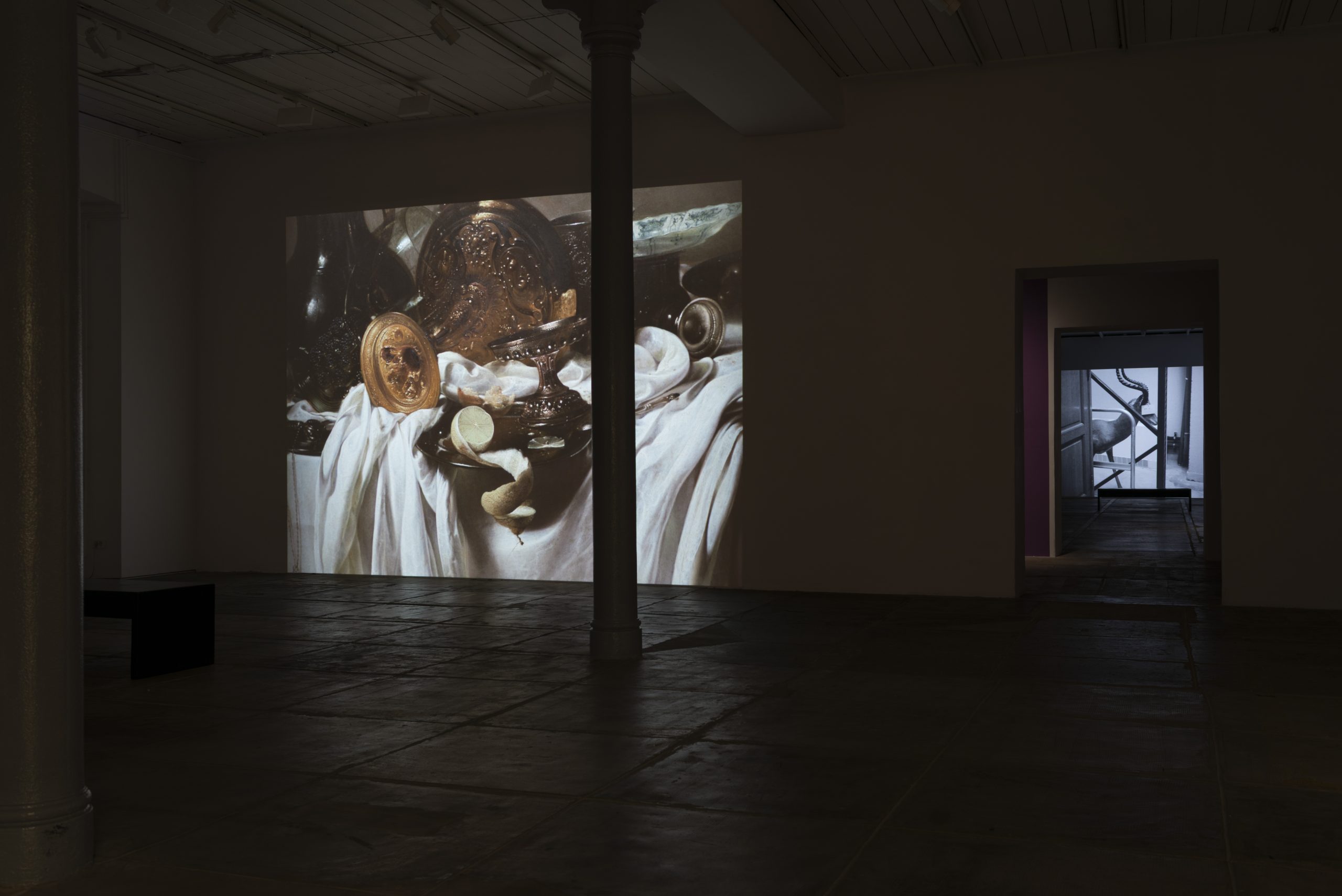
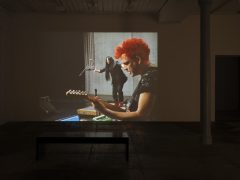
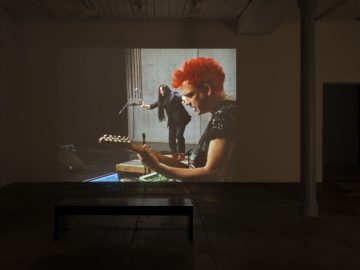
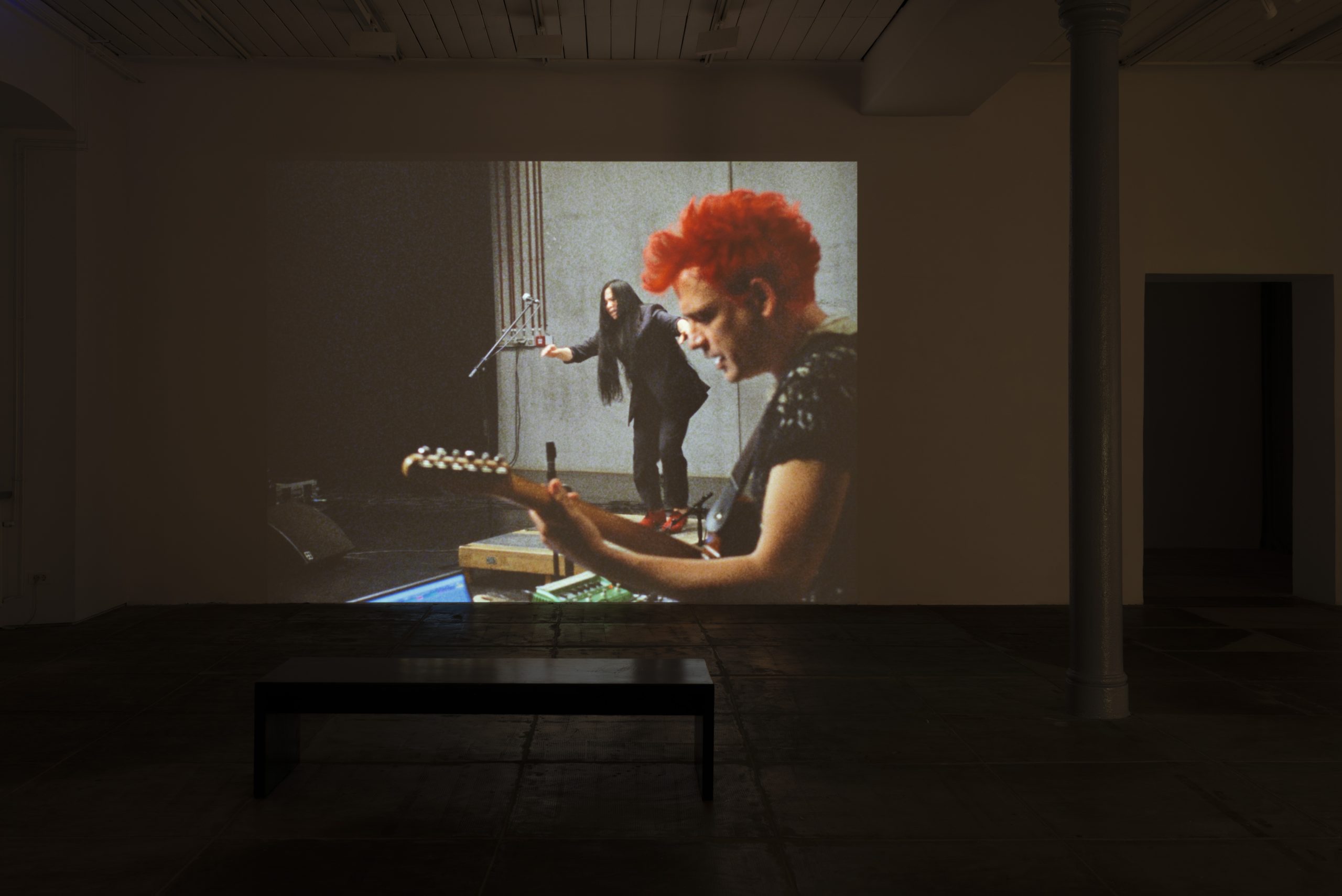
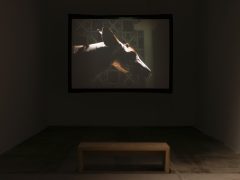
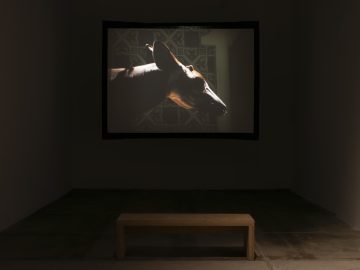
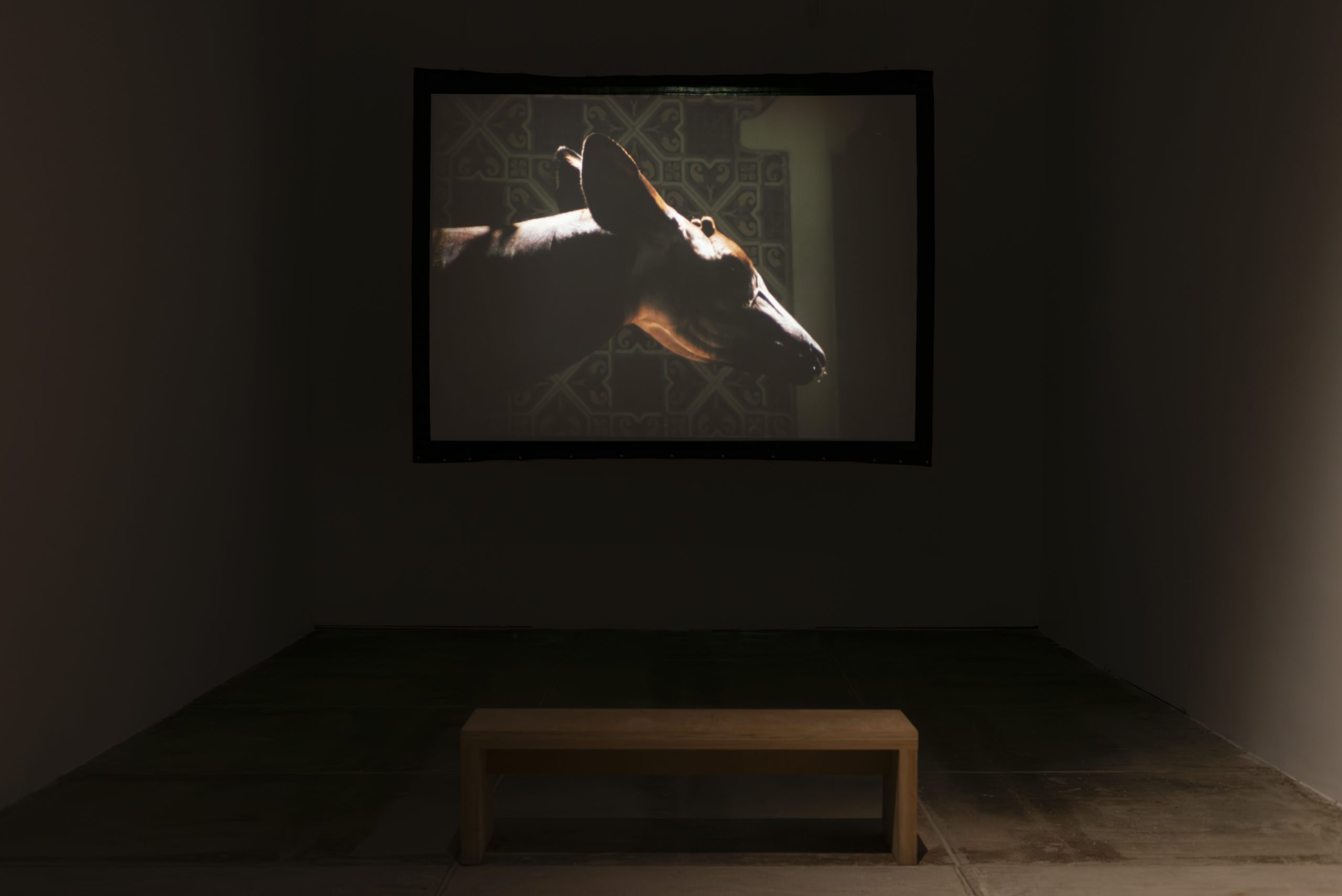
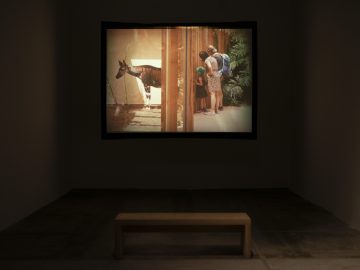
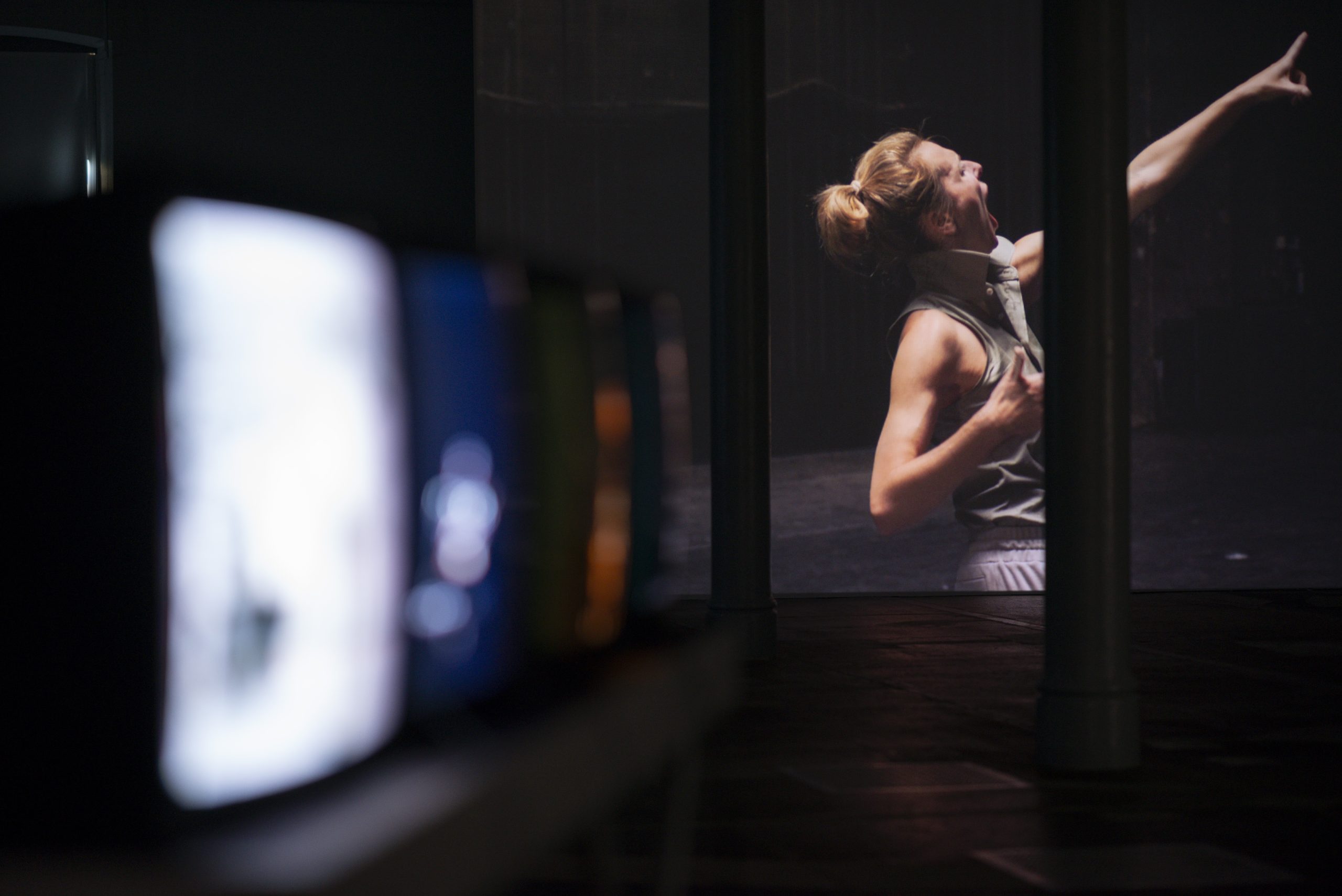
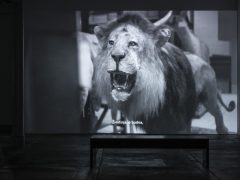
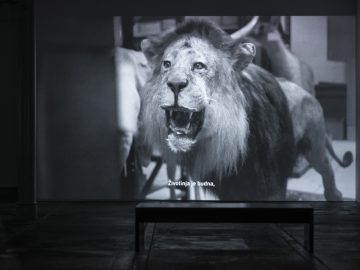
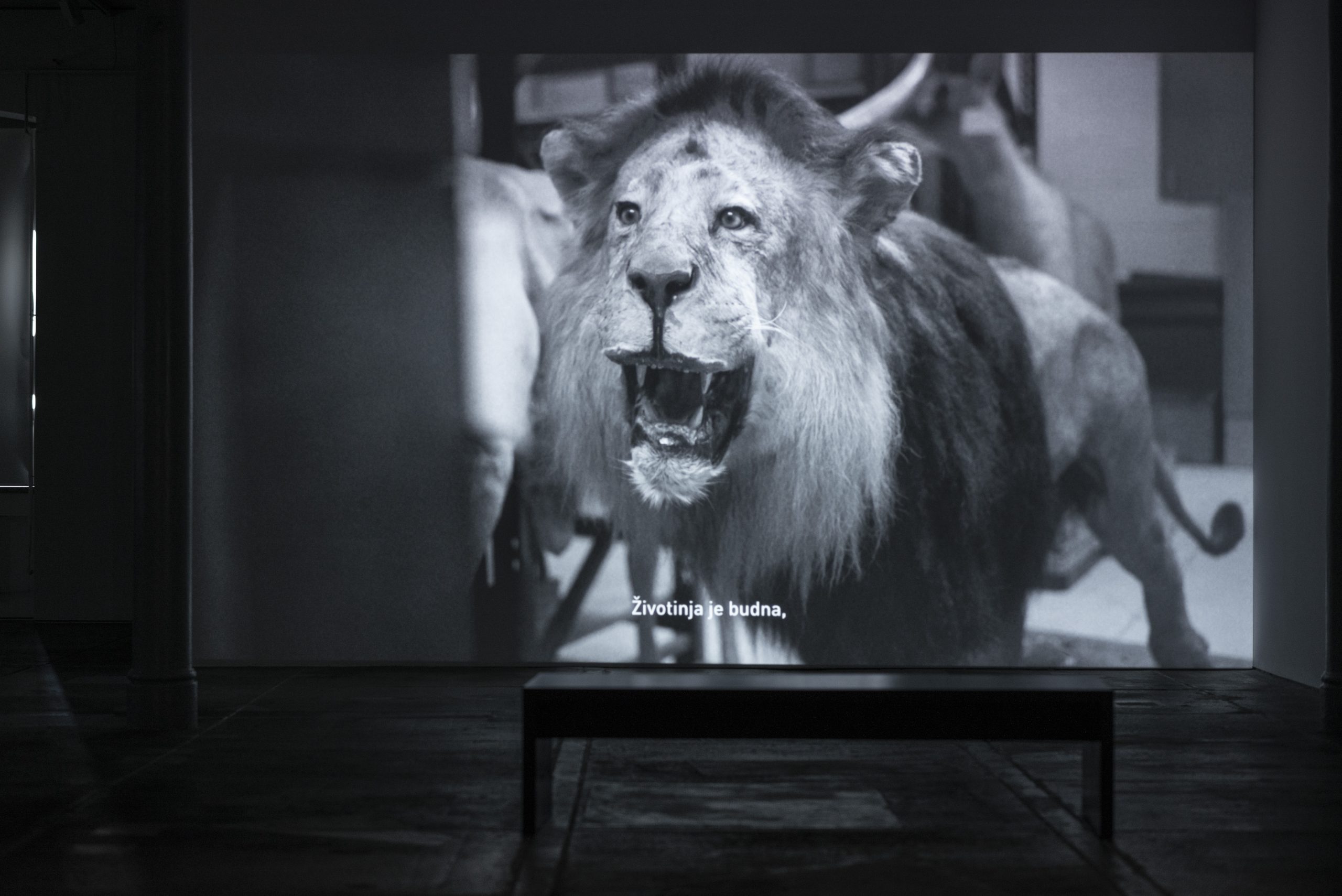
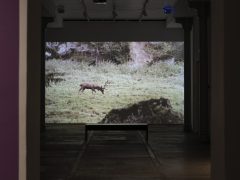
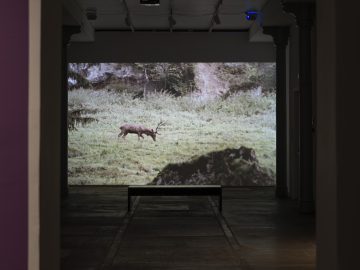
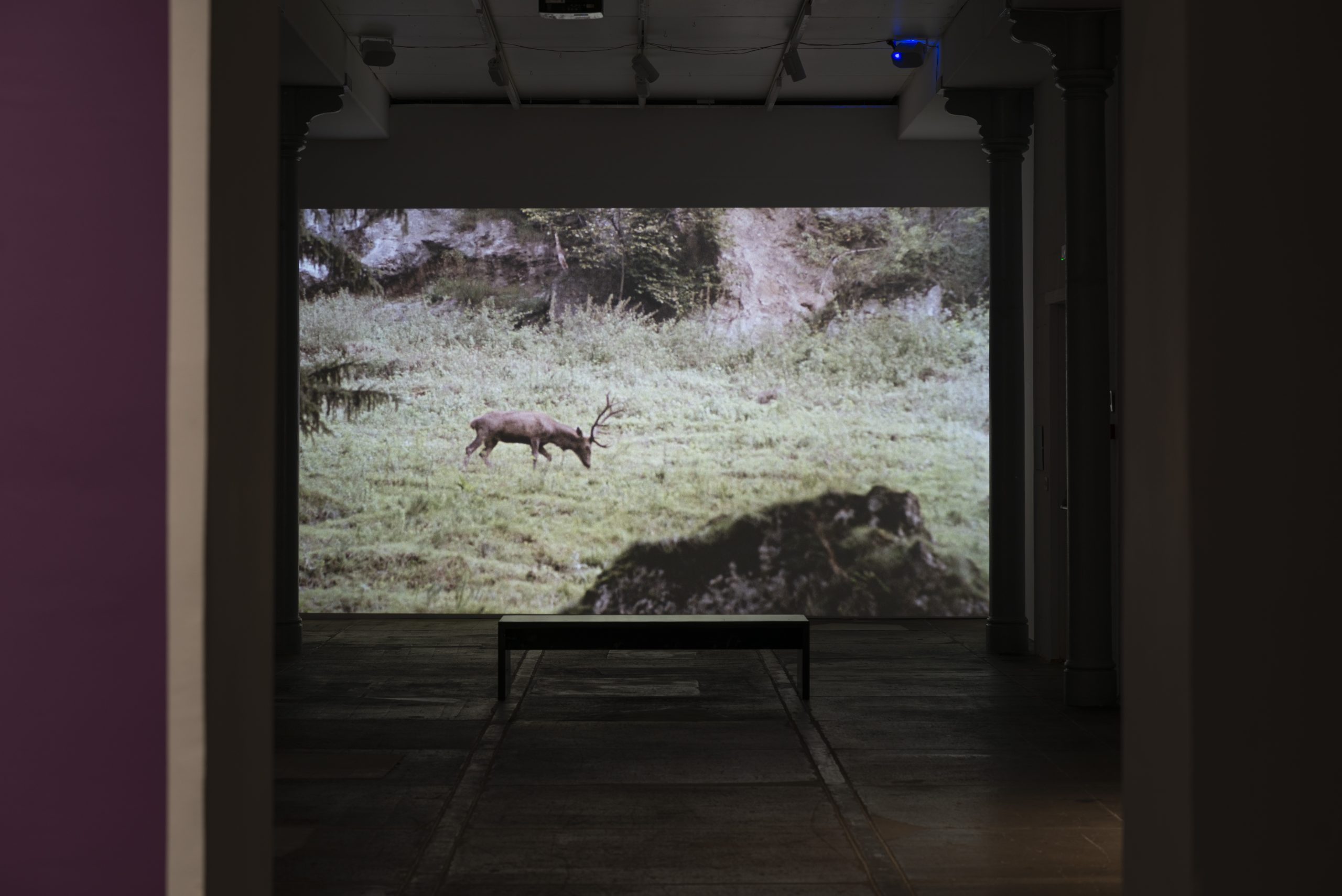
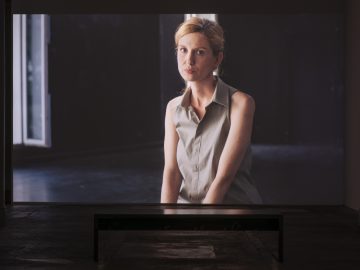
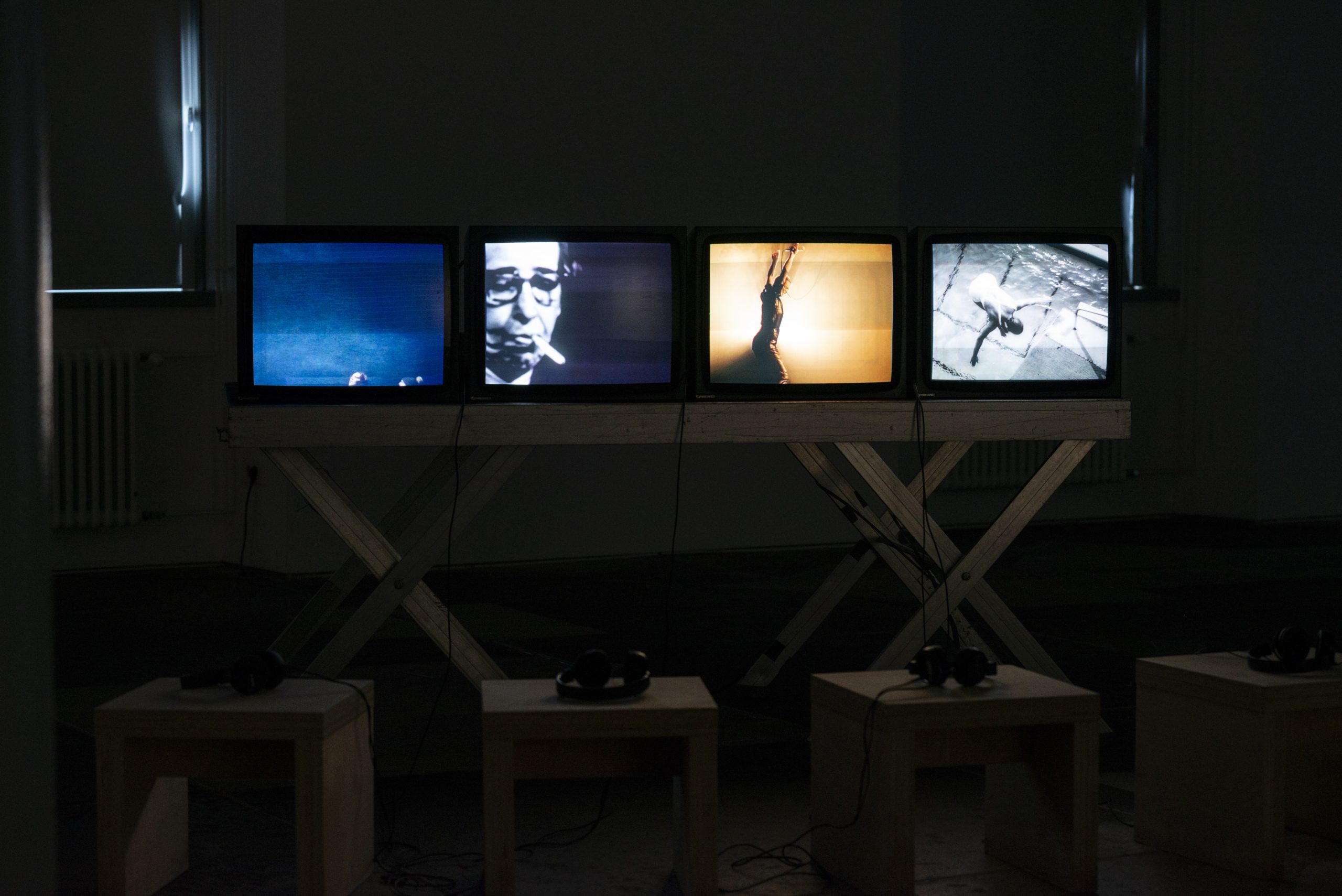
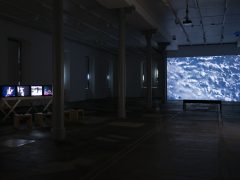
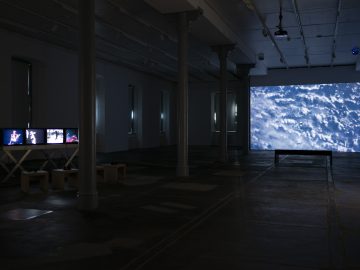
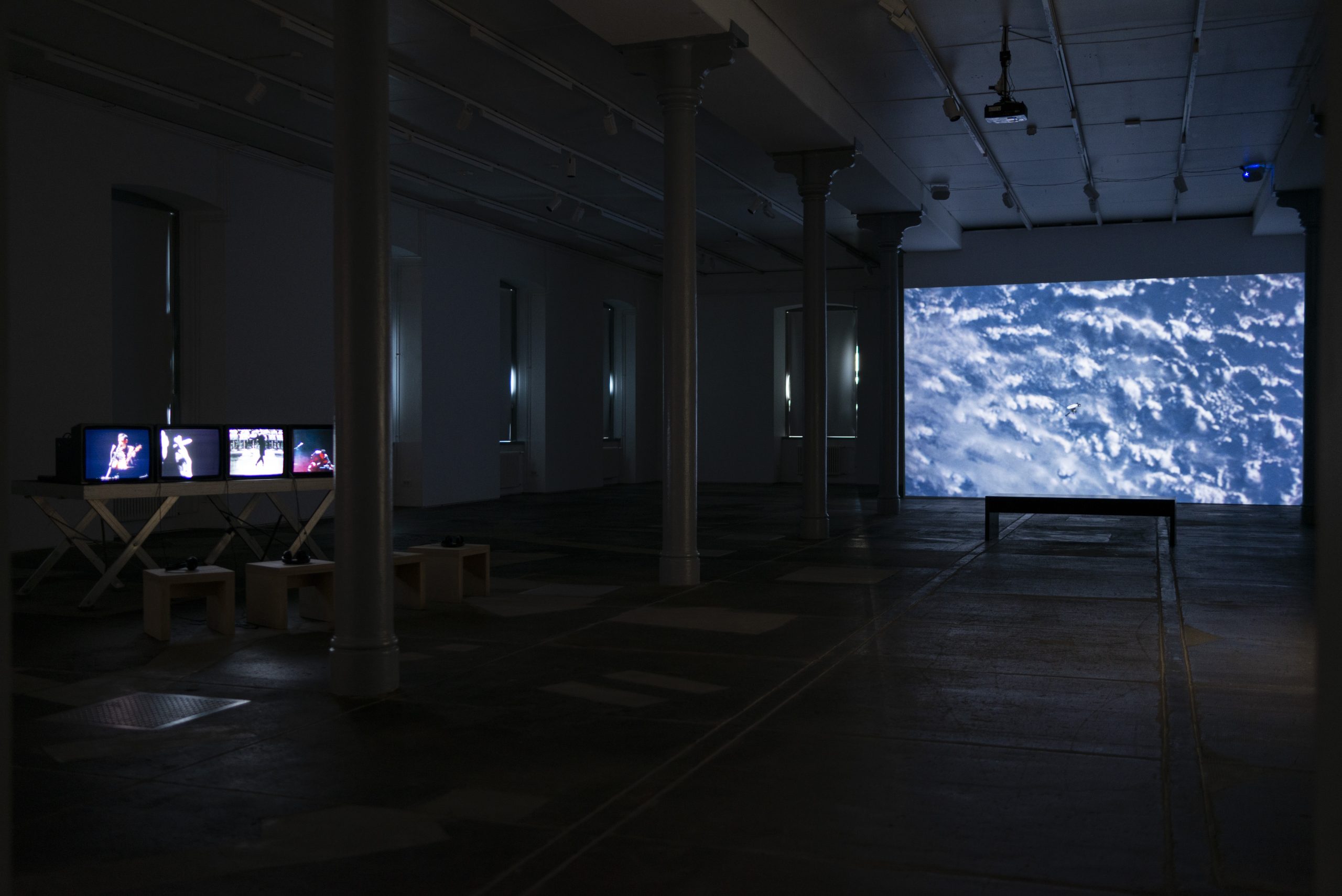
The exhibition Choreography of Violence brings together four works as immersive audiovisual installations. Situated between the documentary and the performative, the works are focusing on the poetics and politics of the moving image, fully transforming the exhibition space. The exhibition puts into dialogue Jureša’s new experimental film Don’t Take It Personally (2025), experimental film Ubundu (2019), and a monumental and complex work Aphasia (2019) – a feature-length film essay structured in three chapters. The presentation of Aphasia is complemented by Aphasia, Score for Monitors (2025), a multi-channel installation based on an edited recording of the eponymous multimedia concert performance. Most of the works are exhibited in Croatia for the first time.
Focused on the mechanisms that frame space and time, place and identity, Jelena Jureša’s artistic practice over the past five years, reveals constellations of suppressed images of history. Jelena’s work is marked by a deep immersion in the histories and politics of the long twentieth century, exposing the mechanisms of representation that reveal how colonialism, nationalism, racism, and capitalism remain inextricably intertwined. Choreography of Violence thus detects a network of relationships that spans decades and traverses the spaces of the European continent, different states, political and social contexts – pointing to crises and silences while creating a visual space where the personal becomes inseparable from the political.
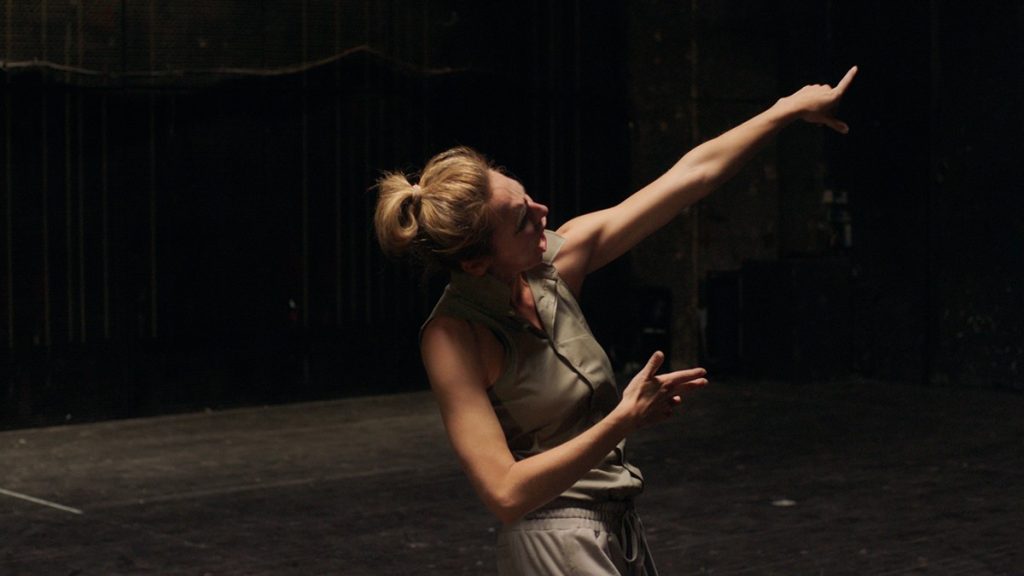
The cartography of Aphasia begins with the colonial aphasia of Belgium’s colonial past, continues by exposing Austrian racism and antisemitism from the period of World War II, and concludes with a photograph depicting the atrocities of the 1990s war in Bosnia. Jelena’s new experimental film, Don’t Take It Personally, shown in Croatia for the first time and realized through a Croatian co-production with the support of the MMSU and Kamov Residency, is based on texts by Dubravka Ugrešić and explores the topics of historical denial, collective violence, exile, and resistance. By connecting live performance with fragmented scenes from Dutch Golden Age painting, the film represents a meditation on changes in human behavior – from the banality of evil to complicity and indifference, all shaped by capitalism and imperial greed.
The works of Jelena Jureša presented within the exhibition Choreography of Violence confront us with the truths and silences of history, highlighting the power of art to give voice to what is suppressed, forgotten, or unspeakable.
Curated by: Branka Benčić
Opening on Thursday, 13 November, 7 PM
Jelena Jureša is a visual artist. She has presented her work in solo and group exhibitions in Belgium, Austria, Croatian, Serbia, Slovenia, Greece, Italy, France and the USA. Her most recent international exhibitions include the Manifesta Biennial (Prishtina, Kosovo); Contour Biennale (Mechelen, Belgium); and the Industrial Art Biennial (Labin, Croatia). Her solo exhibitions include Argos Centre for Audiovisual Arts (Brussels); the dual solo show Run-through at kunstencentrum nona (Mechelen); Salon of the Museum of Contemporary Art (Belgrade); BAK, basis voor actuele kunst (Utrecht); the City Galleries Osijek. Her films have been screened at festivals and venues such as FIDMarseille, Ji.hlava IDFF, Maxim Gorki Theater (Berlin), and Kino umjetnika at the Museum of Contemporary Art, Zagreb. Jureša has participated in artist residencies in Paris, at the Hyde Park Art Center in Chicago, and MQ21 in Vienna. She holds a PhD from Ghent University and KASK Conservatorium, where she currently teaches. She lives and works in Ghent (Belgium).
The exhibition is accompanied by a complementary program of talks, workshops, and screenings, as well as a forthcoming publication developed in collaboration with the CAS –Center for Advanced Studies Southeast Europe University of Rijeka, KASK & Conservatorium, as well as a symposium organized by CAS SEE in collaboration with the museum.
Education department: Ivana Golob Mihić, Ana Žarković
Graphic and exhibition design: Maša Poljanec, Oaza
The exhibition is supported by the City of Rijeka, the Ministry of Culture and Media of the Republic of Croatia, and the Primorje-Gorski Kotar County.



Photo: Hrvoje Franjić